
Why I Wrote This Is Your Body on Trauma
There’s a huge understanding gap in the way we practice nutrition: a lack of a trauma-informed understanding of behavior change.

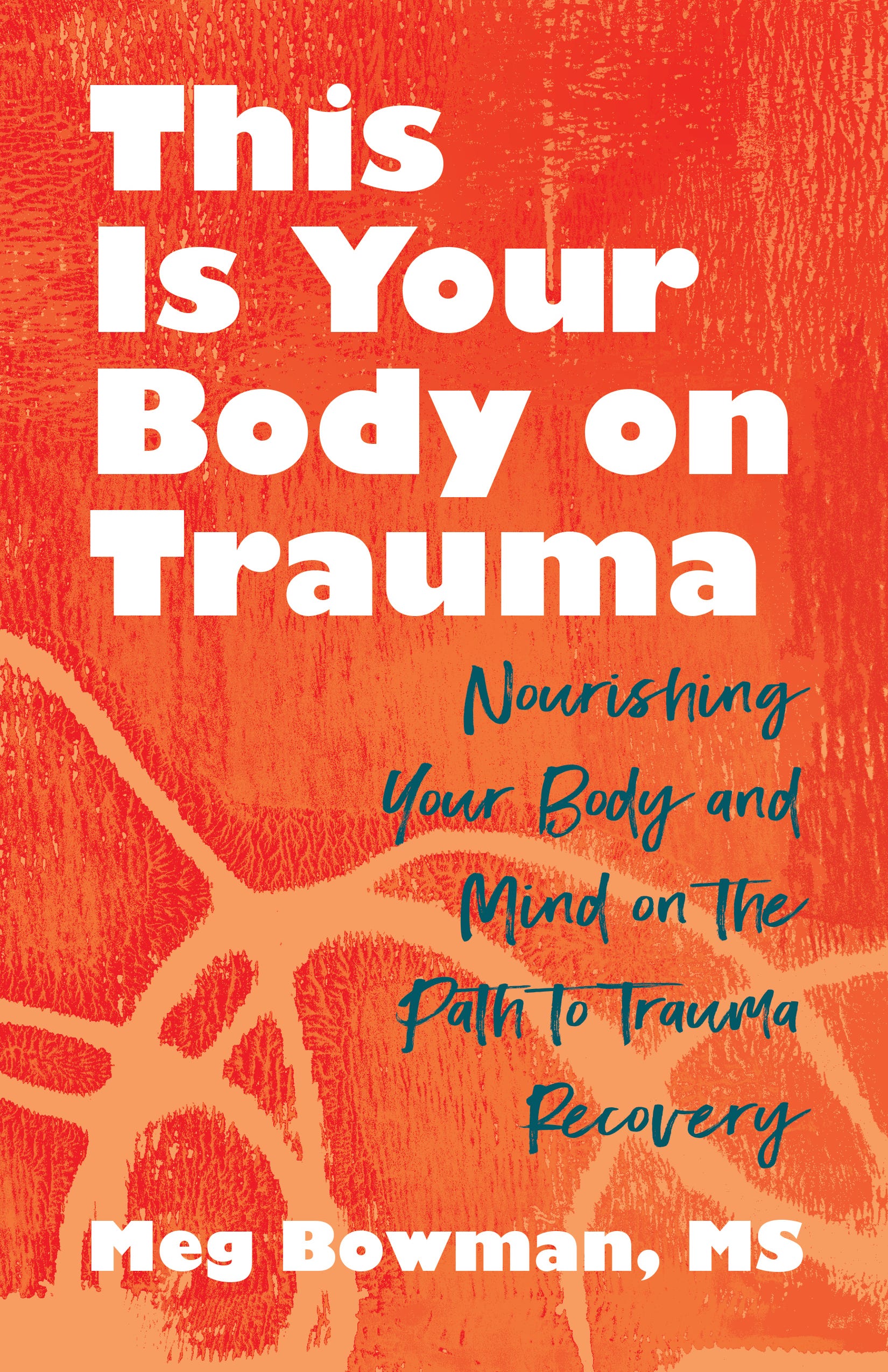
When I tell people I wrote a book about trauma and nutrition, the most common response I get is a pause, followed by: “I’ve never seen those two things put together before.”
And that, right there, is the problem.
There’s a huge understanding gap in the way we practice nutrition.
That gap isn’t about carbs or macros, or even about whether you should eat butter or not. It’s about safety. Specifically, the lack of a trauma-informed understanding of behavior change and how profoundly it shapes the way people eat, care for themselves, and try (and fail, and try again) to make changes in their health.
I wrote This Is Your Body on Trauma because I’ve watched too many people blame themselves for not having the willpower to “get healthy,” when what they really lacked was an environment that allows their nervous system to feel safe and the permission to honor safety first in their food choices.
As you’ve seen on social media, nutrition in America has become a kind of moral performance.
We’ve turned food into proof of our goodness or our discipline, rather than a tool for connection and repair.
When someone “falls off the diet wagon,” we call it non-compliance. When someone can’t follow a restrictive plan, we assume they just don’t want it badly enough.
What if the Problem is Not Motivation?
But what if the problem isn’t motivation at all?
What if, for people who have experienced trauma or who are simply living through the unremitting chronic stress (waves in the air at the world right now), the problem is that their nervous system doesn’t have the capacity for sustained change?
This is the part that social media-inspired nutrition so often misses. We talk endlessly about protein intake, blood sugar balance, and food quality (#ultraprocessedfood), but we rarely talk about what happens when the body is in survival mode.
When your nervous system doesn’t feel safe, meal prepping or grocery shopping or remembering to eat a balanced meal can feel impossible. After all, safety is the nutrient your nervous system craves most.
In a survival state, you may not feel hungry, ever, or conversely, you may do as I once did, and send your spouse to the grocery store to get “all the carbs.” If food has been an adaptive coping mechanism for safety, removing it without a plan or alternatives can feel terrifying.
Without understanding that context, every nutrition plan feels punitive. Every missed goal feels like failure. Every craving feels like a flaw.
The Reality of Ignoring This
Each January, you can see what happens when we ignore this reality. People rush into radical shifts in food and fitness, throwing their nervous systems into chaos in the name of a fresh start: “New year, new you!”
For a few weeks, it feels exciting. There is structure and certainty and camaraderie and the thrill of change. But as soon as life starts life-ing again, those same radical shifts start to feel stressful, and your plan falls apart.
Where Polyvagal Theory Comes In
It’s not that we’re not capable of change; it’s that we’re not choosing health behaviors that take into account the state of our nervous systems. Polyvagal Theory helps explain why.
Developed by Dr. Stephen Porges, it shows how the nervous system shifts between states of ventral safety, sympathetic activation, and dorsal shutdown.
When we are regulated in ventral, we can access curiosity, creativity, and have the capacity to choose to take care of ourselves. When we are in an activated sympathetic state, we may find ourselves being reactive or responsive to food, seeking control or quick fixes. When we are in dorsal shutdown, even small changes can feel insurmountable.
So, I Wrote a Book
I wanted to write a book that helps people understand this pattern and gives them language for what’s happening inside their nervous system and how to work with, not against it.
Safety is the foundation of everything else. Take a look at these actual client examples to give you an idea of where nutrition practice goes wrong:
One client was told, “If you eat a cupcake for your birthday, even just once a year, you’ll never get healthy.” She had an excellent diet, normal labs, and her inflammatory bowel disease was in remission. That one comment made her stress over every bite for the next five years.
Another client was told to go on a carnivore diet to fix her mental health, despite being a lifelong vegetarian for religious and ethical reasons.
Two teens were told by the same MD to try an anti-candida diet for ADHD. Six months later, both developed anorexia after the diet fueled beliefs that most food was bad.
Another woman with diabetes was told to do a five-day water fast, even though she had grown up with food insecurity and was still traumatized by the thought of missing a single meal.
None of these recommendations considered the person’s history or nervous system. Each of them caused more harm than good.
We Have to Rethink Nutrition
This is why I wrote This Is Your Body on Trauma. Nutrition has to begin with understanding safety, capacity, and connection. It has to acknowledge that behavior change is not just a matter of knowing what to do, but of having a nervous system that feels safe enough to do it.
This book is not about creating the perfect diet to heal your trauma once and for all. It’s about learning to listen to your nervous system’s cues, even when they’re messy, even when they change day to day. It’s about shifting the goal from control to care.
Because when we start from safety, everything else becomes possible. At its core, This Is Your Body on Trauma is an invitation to stop fighting your body and start understanding it. To stop measuring your worth by your willpower. To see food as a bridge back to safety, resilience, and belonging.
Because when you learn to nourish safety first, healing no longer feels like a battle. It starts to feel like home.
Buy the Book Today
If you’re ready to expand your ability to support clients, my book may be a useful tool. Buy Your Copy of This is Your Body on Trauma Now!

What an incredibly powerful perspective and big picture view. I love, "At its core, This Is Your Body on Trauma is an invitation to stop fighting your body and start understanding it. To stop measuring your worth by your willpower. To see food as a bridge back to safety, resilience, and belonging."
Your book is so good, Meg! Thank you for bringing it into the world. Happy launch day!